

Guide
Plots vs Apartments vs Builder Floors in NCR 2026: What Should You Buy?
An honest 2026 guide to choosing between a plot, an apartment and a builder floor in Delhi NCR — the real trade-offs in appreciation, income, liquidity, finance, maintenance and control, and which suits which buyer.

Sumit Chauhan · Director
Key takeaways
- Apartments: most liquid, easiest to finance and rent, full amenities and security — but modest yields, ongoing maintenance and no land ownership.
- Plots: highest long-term land-appreciation potential and full control, but no income until built, capital tied up, and the least liquid and most title-sensitive format.
- Builder floors: low-density living with more carpet and privacy at accessible prices — but smaller communities, fewer amenities and colony-dependent resale.
- There is no universally best format — match it to your goal (income, appreciation or living), budget, horizon and how hands-on you want to be.
- Verification differs by format: apartments/floors need RERA and (for floors) a licensed colony and clear separate title; plots need clear title and the right authority/licence approval.
Once you have decided roughly where and how much to spend, the next real fork in an NCR property decision is what format to buy: a flat in a gated apartment community, an independent builder floor, or a plot of land to hold or build on. These three are genuinely different assets — they behave differently on appreciation, income, liquidity, financing, maintenance and control — and the right one depends far more on your goal and temperament than on which is "best." This honest guide compares all three, so you can match the format to your situation rather than defaulting to whatever a particular salesperson is selling. It sits within our NCR property investment guide, which frames how format choice fits your overall return.
The three formats, defined
An apartment is a unit in a gated, multi-storey community, owned along with an undivided share of the common land and managed collectively through maintenance charges. It is the mainstream NCR product — the bulk of what developers build and what most buyers purchase.
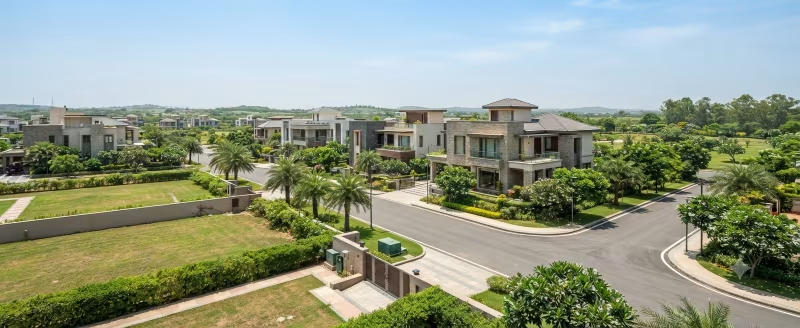
A builder floor (independent floor) is a single floor of a low-rise building, typically two to four storeys on an individual plot, owned as a self-contained home — often with its own entrance, more usable carpet area and sometimes a private terrace or stilt parking, but little or no shared community infrastructure. Builder floors are especially common in New Gurgaon, parts of South Delhi and licensed floor colonies.
A plot is a parcel of land itself, which you can hold as a pure land investment or build on to your own design. You own the land outright (or on long lease in UP), with no building between you and the asset's core value. Plots are prominent along the Yamuna Expressway, in licensed plotted colonies and in authority schemes.
Understanding that you are really choosing between a managed share of a building, a self-contained low-rise home, and land itself is the foundation of the decision.
Appreciation: where the growth comes from
The three formats grow in value through different mechanisms. A plot is the purest appreciation play, because land is the component of real estate that actually appreciates — a building only depreciates as it ages. Historically, on emerging, well-located corridors, plots have delivered the strongest long-term capital growth of the three, which is their central attraction. The catch is that this is a long-horizon bet that depends heavily on the location's trajectory and on the plot being genuinely developable with clear title.
An apartment appreciates through a combination of land share and location demand, but the building component gradually ages and depreciates, which caps very long-term growth and is why decades-old towers eventually trade on land and redevelopment value rather than the flat itself. A builder floor sits in between: you own a larger share of a small plot than an apartment buyer does, so you capture more of the land-appreciation benefit, but the structure still ages. For pure long-term appreciation, the rough order is plots first, then floors, then apartments — though a well-located apartment on a booming corridor can easily out-perform a poorly-located plot, so location still trumps format.
Income: what each earns while you hold it
Here the order reverses. An apartment is the easiest of the three to rent, to the widest tenant pool, with the least effort — a managed community with amenities is what most tenants want, so apartments offer the most reliable (if modest) rental income, broadly in NCR's 2.5–4% gross range as our rental yield guide explains. A builder floor can also be rented, often to families wanting more space and independence, though the tenant pool is somewhat narrower and there are fewer amenities to attract premium rent.
A plot, by contrast, earns nothing while you hold it undeveloped — no rent, only holding costs and (eventually) appreciation. This is the single most important practical difference for many buyers: a plot ties up your capital with zero income for the entire holding period, which only makes sense if you are confident of the appreciation and do not need the money working for you in the meantime. If current income matters to you, the plot is the weakest choice; if pure long-term growth is the goal and you can forgo income, it is the strongest.
Liquidity: how easily you can exit
Liquidity — how quickly and cleanly you can sell — again favours apartments. An apartment has the deepest buyer pool and the most standardised, bank-friendly transaction, so it is usually the quickest to sell at a fair price. A builder floor is reasonably liquid in established floor colonies but depends on the specific colony's desirability and on finding a buyer who wants that particular low-rise format. A plot is typically the least liquid of the three: the buyer pool is smaller, valuation is more subjective, and title and approval scrutiny is heavier, so a plot can take longer to sell and is more sensitive to market mood. If there is any chance you will need to exit quickly, weight liquidity heavily — and that points toward an apartment.
Financing: how the bank sees each
Home loans are easiest and cheapest for apartments, especially in bank-approved projects where the lender has already vetted the title and approvals; loan-to-value is typically the most generous. Builder floors are financeable but the bank scrutinises the plot's title, the colony's licensing and the floor's separate registrability more closely, so approval can be slower and conditions tighter. Plots are the hardest to finance: many lenders offer only "plot loans" or "land loans" at lower loan-to-value and sometimes higher rates than a home loan, and a pure investment plot with no construction plan may attract limited funding. If you are relying on leverage, an apartment stretches your budget furthest; a plot demands more of your own capital.
Maintenance, control and lifestyle
The formats differ sharply in how much they demand of you and how much freedom they give. An apartment is the lowest-effort to own — the community handles security, common-area upkeep, power backup and amenities — but you pay ongoing maintenance charges (significant on luxury projects), live by the community's rules, and cannot alter the structure. A builder floor gives more independence and usable space, often a private entrance and terrace, and far lower or no community maintenance, at the cost of fewer amenities, a smaller or no managed community, and sole responsibility for your own upkeep and security. A plot gives the most control of all — you decide if, when and what to build — but delivers no amenities, no security and no income until you develop it, and demands the most active management. Match this honestly to your temperament: apartments suit those who want convenience; floors suit those who value space and independence; plots suit the hands-on, patient owner.
Why NCR is having a plotted and low-rise moment
It is worth understanding why plots and builder floors have drawn so much attention in NCR recently, because the trend shapes what you will be shown. Policy has actively encouraged low-rise and plotted development — Haryana's Deen Dayal Jan Awas Yojana (DDJAY) spurred a wave of licensed plotted and floor colonies in New Gurgaon, and plotted schemes along the Yamuna Expressway near Jewar have multiplied on the back of the airport story. Buyer appetite has shifted too: a post-pandemic preference for lower density, more private space and the control of owning land has made floors and plots aspirational in a way they were not a decade ago.
This is genuine opportunity, but it is also where the sharpest cautions apply. The same enthusiasm has drawn unlicensed colonies and, in the worst cases, agricultural land dressed up and sold as developable residential plots. So while the plotted and floor trend is real and often sensible, it raises — rather than lowers — the importance of the format-specific verification below. A booming category attracts both good product and opportunists, and only paperwork tells them apart.
Which format suits which buyer
Pulling it together into a practical match:
- Buy an apartment if you want a liquid, financeable, low-effort asset you can live in or rent easily, you value amenities and security, and you are comfortable with modest yields and ongoing maintenance. This is the right default for most end-users and mainstream investors.
- Buy a builder floor if you want more space, privacy and independence than an apartment at an accessible price — especially in New Gurgaon — and you do not mind fewer amenities and a smaller community. Our New Gurgaon value guide covers this market in depth.
- Buy a plot if your goal is maximum long-term land appreciation, you can forgo income and tie up capital for years, you are confident of the location's trajectory, and you have the patience and capital (plots are harder to finance). The Yamuna Expressway near Jewar is the most talked-about plot corridor, covered in our Jewar Airport guide.
As always, the right answer is personal. A young family wanting a home now and an investor seeking pure land upside should rationally choose completely different formats, and both can be right.
A simple way to decide
If you are unsure, answer three questions honestly. First, do you need income while you hold? If yes, a plot is largely ruled out, pushing you toward an apartment or a rentable floor. Second, what is your horizon and risk appetite? A long horizon and high conviction in a location favour a plot's appreciation; a shorter or more cautious horizon favours a liquid apartment. Third, how hands-on do you want to be, and how much does lifestyle matter? Wanting convenience and amenities points to an apartment; wanting space, independence and control points to a floor or a plot. Your three answers usually converge on one format — and where they conflict, they reveal the real trade-off you are making, which is exactly the conversation we have with buyers before recommending anything.
Verification: it differs by format
The due diligence changes meaningfully with the format, and getting it wrong is costliest on the land-heavy options. For an apartment, verify the project's RERA registration on the official HARERA or UP-RERA portal, the developer's record and the committed timeline, as our guide to verifying a RERA project sets out. For a builder floor, additionally confirm that the underlying plot sits in a licensed colony (a DTCP licence in Haryana), that the floor is separately registrable with clear, independent title, and that approvals cover the number of floors being sold. For a plot, title is everything: confirm clear, marketable ownership, the correct authority or DTCP approval and land-use, that it is genuinely developable, and that it is not agricultural or disputed land being sold as residential. The cheaper the format looks relative to the area, the harder you should check why.
How Chahat Homes helps
Because we are paid by the developer only on a successful transaction, our guidance on format is free and genuinely neutral — we have no reason to steer you to a plot over a flat or vice versa. We will help you match the format to your actual goal, income need, horizon and temperament, verify the title, RERA and licence status appropriate to that format, model the honest return including the income a plot forgoes, and tell you plainly when a different format fits you better. Start with the Gurgaon and Noida hubs and our NCR investment guide, then talk to us to compare specific options.
The honest bottom line
Plots, apartments and builder floors are three different tools for three different jobs. Apartments win on liquidity, financing, income-ease and convenience; plots win on long-term land appreciation and control but earn nothing and tie up capital; builder floors offer space, privacy and a share of land-appreciation at accessible prices, with fewer amenities. None is universally best — the right choice falls out of your goal, your horizon, your need for income and how hands-on you want to be. Decide the format deliberately, verify the title and approvals that format demands, and you will own the right kind of asset for your situation, not just the one someone sold you.
Frequently asked questions
Is it better to buy a plot or a flat in NCR? Neither is universally better. A plot offers the highest long-term land-appreciation potential and full control, but earns no income, ties up capital and is the least liquid and hardest to finance. A flat is liquid, financeable, rentable and low-effort but with modest yields and ongoing maintenance. Choose by whether you prioritise appreciation-and-control or income-and-liquidity.
Do plots appreciate more than apartments? Historically, well-located plots on emerging corridors have delivered the strongest long-term capital growth, because land appreciates while buildings age and depreciate. But this is a long-horizon bet dependent on the location and clear title, and a well-located apartment on a booming corridor can out-perform a poorly-located plot. Location still matters more than format.
What is a builder floor and who should buy one? A builder floor is a single floor of a low-rise building (usually two to four storeys on an individual plot), owned as a self-contained home with more usable area and privacy than an apartment but fewer amenities and a smaller community. It suits buyers who value space and independence at an accessible price, especially in New Gurgaon.
Which format earns the best rental income? Apartments, generally. They rent most easily to the widest tenant pool with the least effort, offering the most reliable income (broadly 2.5–4% gross in NCR). Builder floors rent reasonably but to a narrower pool; an undeveloped plot earns no rental income at all.
Are plots harder to finance than apartments? Yes. Apartments attract the easiest, highest loan-to-value home loans, especially in bank-approved projects. Plots typically qualify only for lower-LTV plot or land loans, sometimes at higher rates, and a pure investment plot with no construction plan may get limited funding — so plots demand more of your own capital.
Which format is most liquid in NCR? Apartments are the most liquid, with the deepest buyer pool and the most standardised, bank-friendly transaction. Builder floors are reasonably liquid in established colonies. Plots are usually the least liquid, with smaller buyer pools, more subjective valuation and heavier title scrutiny, so they can take longer to sell.
What should I verify before buying a plot? Title above all: confirm clear, marketable ownership, the correct authority or DTCP approval and residential land-use, that the plot is genuinely developable, and that it is not agricultural or disputed land sold as residential. An unusually low price relative to the area is a reason to check harder, not a bargain to grab.
Which format is best for a first-time end-user? For most first-time end-users, an apartment or a builder floor — both give you a home to live in now, with the apartment offering amenities, liquidity and easy financing, and the floor offering more space and independence. A plot suits a first-timer only if they specifically want to build and can forgo income while doing so.
Part of a bigger guide
This article is one chapter of our complete guide: NCR Property Investment Guide 2026: Honest Returns, Risks & Where to Invest.

Sumit Chauhan — Director
Mentioned in this article
Related Projects

DLF
DLF Privana South
Sector 113, Gurgaon
Emaar India
Emaar Emerald Hills Plots
Golf Course Extension Road, Gurgaon

Ace Group
Ace Palm Floors
Sector 89, Gurgaon
Keep reading
Related Insights
Investment Guide
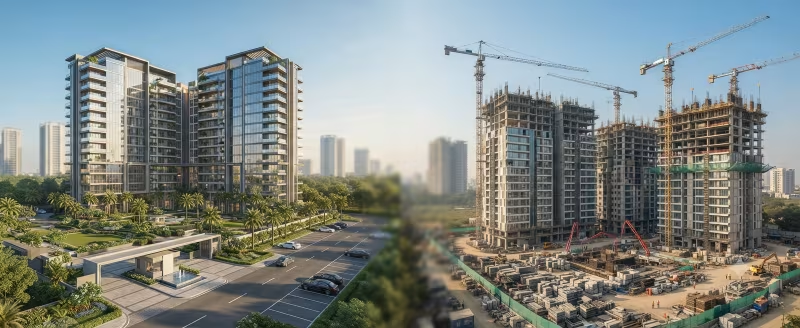
Ready-to-Move vs Under-Construction in NCR 2026: The Honest Trade-off
An honest 2026 guide to choosing between ready-to-move and under-construction property in Delhi NCR — the real price, GS…

Investment Guide
Best Sectors for Rental Yield in NCR 2026: An Honest Investor's Guide
An honest 2026 guide to rental yields across Delhi NCR — what yields are realistic, which sectors and asset types yield…

Investment Guide
NCR Property Investment Guide 2026: Honest Returns, Risks & Where to Invest
An honest 2026 guide to investing in Delhi NCR property — how returns really work, the current slower market, which asse…