Gaurs
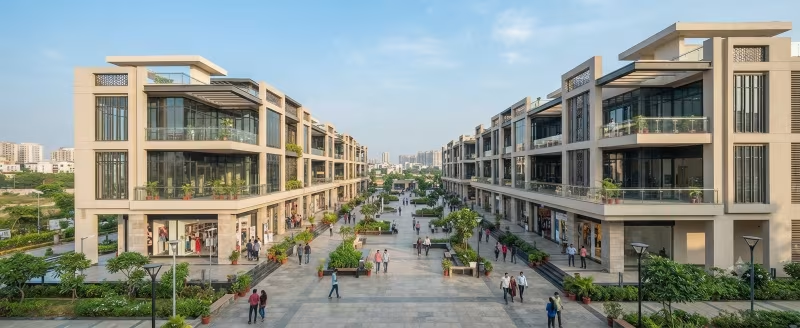
Gaur Aero Mall
Hindon Airport (Ajantapuram), Ghaziabad

City Guide · Uttar Pradesh
Ghaziabad is a large, well-connected NCR city east of Delhi, spanning established belts like Indirapuram and Vaishali and fast-growing corridors along NH-24 (Delhi–Meerut Expressway), Raj Nagar Extension and Siddharth Vihar.
Prices updated 26 Sep 2026
Micro-Markets
Each corridor has its own price band, buyer profile and infrastructure story.
Browse by Category
Live Inventory
6 published projects · page 1 of 1

Gaurs
Hindon Airport (Ajantapuram), Ghaziabad

Gaurs
Wave City (NH-24), Ghaziabad

Prateek Group
Siddharth Vihar, Ghaziabad

Prateek Group
Crossings Republik, Ghaziabad

Prateek Group
Siddharth Vihar, Ghaziabad

Prateek Group
Siddharth Vihar, Ghaziabad
The Market
Ghaziabad is one of the largest cities in the National Capital Region, immediately east of Delhi in Uttar Pradesh. It combines long-established, fully built-up residential belts — Indirapuram, Vaishali, Kaushambi and Vasundhara — with newer, fast-growing corridors along the NH-24 / Delhi–Meerut Expressway, Raj Nagar Extension and Siddharth Vihar.
The Delhi–Meerut Expressway and the Regional Rapid Transit System (RRTS) have transformed Ghaziabad's connectivity, cutting travel times to Delhi and Meerut sharply and reshaping demand along the NH-24 belt, where large integrated townships such as Wave City are located. Pricing across the city is generally more accessible than Gurgaon or central Noida, which is a large part of its appeal for value-focused and first-time buyers.
As a RERA-registered channel partner, Chahat Homes lists Ghaziabad projects with verified RERA details, honest pricing guidance and clear pros and cons.
Prices & Trends
Pricing in Ghaziabad is best understood belt by belt, because the city spans everything from fully built-up premium townships to emerging value corridors. The established, well-serviced belts of Indirapuram, Vaishali, Vasundhara and Kaushambi — closest to east Delhi and the metro — command the city's higher rates and trade largely as a resale, ready-to-move market with limited new supply. Raj Nagar Extension has become the city's most active high-rise corridor, offering newer gated towers at mid-market prices that draw first-time buyers and upgraders alike.
Along the NH-24 / Delhi–Meerut Expressway belt, large integrated townships such as Wave City, together with Siddharth Vihar and Crossings Republik, make up the value and emerging segment: lower entry prices, bigger masterplans and a longer appreciation horizon tied to the expressway and RRTS. As a rule of thumb, the closer a project sits to the metro and established social infrastructure, the higher the price; the further out along NH-24, the more you trade present-day convenience for a lower entry point and future upside. Across the city the average works out to roughly the figure shown above, but the spread around it is wide, so compare like-for-like locations rather than citywide averages.

Getting Around
Ghaziabad is served by the Delhi–Meerut Expressway and NH-9/NH-24, the Delhi Metro Blue and Red Lines (Vaishali, Kaushambi, Dilshad Garden extensions) and the new Namo Bharat RRTS corridor towards Meerut. It has its own railway junction and quick road access to east Delhi, Noida and Meerut.
What's Coming
Ghaziabad has been one of the biggest beneficiaries of NCR's recent infrastructure push. The Delhi–Meerut Expressway dramatically cut road travel times to east Delhi and towards Meerut, reshaping demand along the NH-24 belt where much of the city's new township supply sits. The Namo Bharat Regional Rapid Transit System (RRTS) — India's first such corridor — now runs through Ghaziabad towards Meerut, putting a high-speed, air-conditioned rail link within reach of several growth corridors and pulling buyer interest towards stations along its route.
On top of this, the Delhi Metro's Blue and Red Lines already serve Vaishali, Kaushambi and the Dilshad Garden extension, giving the older belts direct metro access to Delhi. Together, the expressway and the RRTS are the two infrastructure stories that most change where it makes sense to buy in Ghaziabad: they reward the NH-24 and RRTS-adjacent corridors with improving connectivity while the metro-served western belts retain their convenience premium. For a buyer, the practical question is how close a project actually is to a working station or expressway access point today, versus one that is still promised.
Local Guide
Ghaziabad's appeal is value and connectivity rather than prestige. Established belts like Indirapuram and Vaishali are self-contained, with malls (such as the Shipra and Pacific malls), reputed schools, hospitals and daily-needs retail already in place — which is why ready-to-move homes there suit families who want to settle immediately. The newer corridors along NH-24 and Raj Nagar Extension are still maturing: the housing is newer and better specified, but social infrastructure is catching up, so buyers there are trading some present-day convenience for lower prices and a longer growth runway.
The city suits a few clear buyer types especially well: value-focused and first-time buyers priced out of Noida and Gurgaon; families working in east Delhi, Noida or along the expressway corridor; and longer-horizon investors betting on the RRTS and expressway belts. The honest cautions are equally clear — parts of the older city are congested, quality of maintenance varies sharply between societies, and a few low-lying pockets have historically faced waterlogging, so society selection and a physical site visit matter even more here than the citywide average suggests. As a RERA-registered channel partner, we help Ghaziabad buyers compare belts honestly and verify each project's RERA registration, possession timeline and the real state of its social infrastructure before they commit.
Who Builds Here
Good to know
Ghaziabad suits value-focused and first-time buyers, and families working in east Delhi, Noida or along the expressway corridor. Its appeal is accessible pricing plus strong, improving connectivity (Delhi–Meerut Expressway, Namo Bharat RRTS and the Delhi Metro) rather than prestige. It is less suited to buyers chasing a luxury address. As always, the right answer depends on the specific belt and project, which we help you compare honestly.
It depends on your priority. For ready-to-move convenience with established schools, malls and metro access, the Indirapuram and Vaishali belts lead. For newer gated high-rises at mid-market prices, Raj Nagar Extension is the most active corridor. For lower entry prices and a longer appreciation horizon, the NH-24 belt (Wave City, Siddharth Vihar, Crossings Republik) is the value play. Match the belt to whether you want convenience now or upside later.
Across the city the average works out to roughly the figure shown on this page, but the spread is wide: established metro-served belts like Indirapuram command a premium, while emerging NH-24 corridors sit well below the average. Because citywide averages hide this gap, always compare like-for-like locations and ask us for the current rate on the specific project you are considering.
Raj Nagar Extension is Ghaziabad's most active high-rise corridor, offering newer gated towers at mid-market prices, which has made it popular with first-time buyers and upgraders. As an investment it depends on the specific society's build quality, maintenance and RERA-registered delivery record. Treat it as a mid-market end-user corridor with steady demand rather than a quick-flip play, and verify each project before committing.
The Namo Bharat RRTS — India's first regional rapid-rail corridor — runs through Ghaziabad towards Meerut and has pulled buyer interest towards locations near its stations, improving the long-term connectivity story along the NH-24 belt. The practical test for a buyer is how close a project actually is to a working station today, versus one that is only promised future access. Genuine proximity to a functioning station supports both livability and resale.
Yes. Pricing across Ghaziabad is generally more accessible than central Noida or Gurgaon, which is a large part of its appeal for value-focused and first-time buyers. The trade-off is that the most established belts are closer to Delhi while the cheapest corridors sit further out along NH-24, so you balance price against commute and the maturity of social infrastructure.
The Delhi Metro's Blue and Red Lines serve the western belts — Vaishali, Kaushambi and the Dilshad Garden extension — giving those areas direct metro access to Delhi, which is a large part of their convenience premium. The newer NH-24 and RRTS corridors rely instead on the Namo Bharat RRTS and road connectivity. Confirm the real distance from a project to the nearest working station before you factor metro access into your decision.
Ghaziabad falls under UP-RERA, the Uttar Pradesh authority. Every genuine project should carry its own UP-RERA registration number, which you can verify on the official UP-RERA portal along with its committed possession date and carpet area. Our guide on how to verify a RERA-registered project walks through the steps; we also share the verified number for whichever Ghaziabad project you are considering.
Research First
An honest 2026 guide to commercial property in NCR — how 'assured return' schemes really work, why the biggest promises…
A practical, honest guide to becoming a real estate channel partner in Gurgaon — RERA agent registration, the documents…
How channel partner brokerage really works in Gurgaon and NCR — typical slabs, who pays, what decides your rate, how pay…
We track every launch, every price revision and every infrastructure milestone in Ghaziabad. One call saves weeks of research.
Speak to an advisor
Zero brokerage on primary bookings · RERA-registered · Mon–Sun, 9:30am – 8:00pm IST