
Guide
Noida Expressway & Sector 150 Investment Guide 2026: The Honest Picture
An honest 2026 investment guide to the Noida Expressway corridor and Sector 150 — why it's prized, what it costs, the metro and Jewar connectivity, rental yields, and the real risks before you invest.

Sumit Chauhan · Director
Key takeaways
- Sector 150 is Noida's low-density 'sports city' belt on the Noida–Greater Noida Expressway — among the greenest, most planned sectors, with premium group housing.
- The corridor's strengths are genuine: expressway connectivity, the Aqua Line metro nearby, and a straight run toward the Jewar airport and Yamuna Expressway growth.
- It is already premium-priced for Noida, so the easy early gains are largely made; approach it as a medium-term (5–7 year) hold, not a quick flip.
- Yields are modest (~2.5–4%), so most of the return is appreciation — entry price and the infrastructure timeline decide the outcome.
- Standard Noida rules apply: leasehold tenure, UP-RERA registration, and authority NOC / registry checks are non-negotiable before buying.
If there is one corridor that captures what modern Noida wants to be — planned, green, low-density and well-connected — it is the Noida Expressway belt, and Sector 150 is its showpiece. Over the past few years this stretch has become one of the most sought-after investment and end-user destinations on the Noida side, drawing premium group-housing launches and a steady flow of buyers who want space and order rather than congestion. But sought-after and sensibly-priced are not the same thing, and the honest investor's job is to separate the corridor's genuine, durable strengths from the part of its price that is already paid-forward optimism. This guide does exactly that. It sits within our wider guide to buying in Noida and Greater Noida, which covers the UP-wide rules this corridor also follows.
Where the corridor is and why Sector 150 stands out
The Noida Expressway (formally the Noida–Greater Noida Expressway) is the arterial spine running south-east from the older Noida sectors toward Greater Noida, lined by a sequence of newer residential and commercial sectors. It is the axis along which Noida has extended itself over the last decade, and it connects onward to the Yamuna Expressway and the Jewar airport beyond.
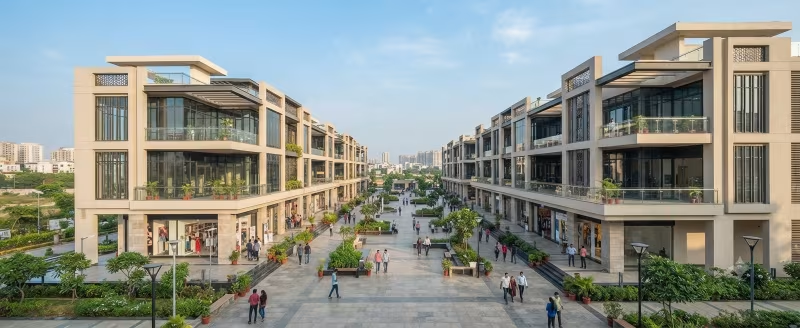
Sector 150 sits near the Greater Noida end of this spine and is unusual in a specific, valuable way: it was master-planned as a low-density "sports city," with a very large share of its area reserved for open space, greenery and sporting facilities, and a deliberately low ratio of built-up residential ground coverage. The practical result is that Sector 150's group-housing projects tend to sit on large plots with generous spacing between towers, extensive landscaping and amenity decks — a genuinely different living experience from the dense high-rise belts elsewhere in the region. That planned low density is the single biggest reason buyers pay a premium here, and it is a real, structural advantage rather than a marketing line, because the open-area reservations are baked into the sector's layout.
The genuine strengths driving demand
Several real drivers underpin the corridor's appeal, and they are worth stating plainly before the caveats.
Connectivity. The expressway itself gives fast road access toward both the older Noida employment sectors and Greater Noida, and the Aqua Line metro runs along the corridor with stations serving the nearby sectors, adding the kind of rail connectivity that durably supports property value. For a commuter working in Noida or Greater Noida, the corridor is genuinely well-placed.
The Jewar axis. Because the expressway feeds into the Yamuna Expressway, Sector 150 and its neighbours sit on the natural route toward the Noida International Airport at Jewar. As that project and its surrounding ecosystem develop, the whole south-eastern axis of Noida — this corridor included — stands to benefit from the demand it pulls in. Our Jewar Airport and Yamuna Expressway guide covers that story and its risks.
Planned, premium living. The low-density layout, the quality of the recent launches, and the concentration of amenity-rich projects have given the corridor a premium, aspirational positioning within Noida. For end-users and for investors targeting the premium rental and resale segment, that positioning is part of the value.
Social infrastructure maturing. Unlike some newer corridors that are still largely empty, the Noida Expressway belt has a growing base of occupied communities, schools, hospitals and retail, which reduces the "will anyone actually live here?" risk that plagues purely speculative areas.
Sector 150 versus the rest of the Noida Expressway
It helps to place Sector 150 against its neighbours, because the corridor is not uniform. The older, Noida-end sectors of the expressway are closer to the established employment hubs and to Delhi, more built-out, and priced accordingly; they suit a buyer who prioritises being near the existing job centres and accepts higher density and older stock. As you move south-east toward the Greater Noida end, the sectors get newer, greener and lower-density, with Sector 150 and its immediate neighbours representing the most deliberately planned, amenity-led part of the belt.
That geography creates a genuine trade-off. Buy nearer the Noida end and you pay for proximity and maturity; buy around Sector 150 and you pay for planning quality, open space and the Jewar-axis growth story, while accepting a slightly longer run into the older employment cores. Neither is objectively better — it depends on where you work, whether you are buying to live or to let, and how much you value green, low-density surroundings over being close to the established centre. The common mistake is to assume the whole expressway is one market; in reality the right sector within it depends on your own commute and priorities, which is exactly the kind of judgement our desk helps buyers make.
A realistic five-year outlook
Looking out five years, the sensible base case for Sector 150 and the premium expressway sectors is steady, quality-led appreciation rather than another sharp re-rating. The corridor has already established itself as a premium address, so the dramatic early gains that came from an unproven sector proving itself are largely behind it. From here, growth is more likely to track the broader Noida market and the pace of infrastructure delivery — the metro, the Jewar airport and the Yamuna Expressway ecosystem — than to leap ahead of them.
The two swing factors are therefore the airport's progress and the wider NCR cycle. If the Jewar airport and its surrounding jobs ecosystem land on schedule, the whole south-eastern axis of Noida, Sector 150 included, has a clear tailwind, and the corridor's premium positioning should hold and build. If those timelines slip, or the NCR market stays in the slower, more selective phase that recent research describes, the corridor still holds its value well because its core appeal — planned, low-density, well-connected living — is real and does not depend on hype. That asymmetry is actually the attraction for a patient buyer: the downside is cushioned by genuine liveability, while the upside is geared to infrastructure that is already under way. It is a reasonable risk profile for an end-user and an acceptable one for a medium-term investor — but not a lottery ticket, and anyone selling it as one is overstating the case.
Who the corridor suits — and who it does not
Being honest about fit prevents disappointment. The Noida Expressway corridor and Sector 150 suit, first, the end-user who values space and planned living — a family that wants a large, well-amenitied home in a green, low-density setting and intends to live there, for whom the premium buys genuine quality of life. It suits, second, the medium-term investor who can hold for five to seven years, buys a well-chosen project at a sensible price, and is content with appreciation-led returns as the corridor and the Jewar axis mature.
It suits poorly the short-term speculator hoping to flip within a year or two: the corridor is already premium-priced, so there is limited room for a quick re-rating, and Noida's modest yields mean you earn little while you wait. It also suits poorly the pure value-hunter, who will find better entry prices in Greater Noida West or other emerging belts — at the cost, of course, of Sector 150's density and planning advantages. Matching your own profile to the corridor honestly is the first and most important step.
The Noida rules that still apply here
Sector 150 is a premium corridor, but it is still in Uttar Pradesh, and the UP-wide specifics covered in our Noida and Greater Noida pillar guide apply in full. Three points bear repeating because buyers at the premium end sometimes assume they do not.
Leasehold tenure. Property here is typically leasehold from the Noida Authority rather than freehold, which means lease terms, transfer charges on resale and the authority's permission and dues clearance all matter. Budget and plan for them.
UP-RERA registration. Every project and phase must be registered with UP-RERA. Verify the registration number the developer gives you against the official record, confirm the promoter, approved plan and declared possession date, and do not pay beyond a refundable token until you have. Our guide to verifying a RERA project walks through the UP-RERA portal.
Authority dues and registries. Even in premium sectors, confirm the developer's authority-dues position and that registries are actually being executed in your specific project, so you are not left holding a completed flat you cannot register.
The honest risks, in one place
Drawing the caveats together, these are the risks an investor should weigh for the Noida Expressway corridor and Sector 150:
- Premium entry price — much of the corridor's quality is already in the price, limiting the scope for a quick re-rating and demanding a longer horizon.
- Infrastructure-timing risk — part of the forward value rests on the Jewar airport, metro extensions and the wider Noida market performing on schedule, which is not guaranteed.
- Modest yields — rental income is low, so returns depend on appreciation and therefore on entry price and patience.
- Amenity-delivery risk — the "sports city" and some community amenities are still maturing; confirm what is actually built versus promised in your specific project.
- Standard Noida risks — leasehold tenure, authority dues and registry delays apply here as across the region.
None of these is a reason to avoid the corridor. Together they define the right way to buy it: a well-chosen, RERA-verified project, at a disciplined price, held for the medium term.
How to invest well on the corridor
Put simply, a disciplined buyer should do five things. First, be clear about your own profile — end-user, medium-term investor, or (if a short-term flipper) look elsewhere. Second, choose a project from a developer with a genuine delivery record, which on the Noida side is your main protection. Third, verify the project on the official UP-RERA portal and confirm the authority NOC and registry position. Fourth, benchmark the specific project's price against genuinely comparable recent transactions in the same sector — not against the corridor's headline average or the developer's quoted appreciation. Fifth, model your return on a 5–7 year horizon with realistic rent and the infrastructure timeline built in, not assumed. Our Noida vs Greater Noida guide can help you sanity-check whether this corridor, or a different sub-market, best fits your budget and purpose.
What to look for in a Sector 150 project
Within the corridor, the gap between a strong project and a weak one is wider than buyers expect, so a few project-level checks pay off. Look first at the density and open space of the specific project — even in a low-density sector, towers-per-acre and the real spacing between buildings vary, and this is much of what you are paying the premium for. Check the developer's delivery record on the Noida side specifically, not just nationally, because execution here has historically been uneven. Examine the amenities that are actually built and functioning versus those still promised in the brochure, particularly the sporting and clubhouse facilities that justify the sector's positioning. Confirm the exact unit's carpet area, floor and aspect, since two units at the same quoted rate can differ materially in usable space and light. Finally, study the payment plan: a construction-linked plan on a RERA-registered project is far safer than a subvention or possession-linked structure that front-loads your outflow. These project-level details, more than the corridor's reputation, decide whether your particular purchase performs — and they are exactly what we check with you before you commit.
How Chahat Homes helps
Because we are paid by the developer only on a successful transaction, our advice on the Noida Expressway corridor is free and genuinely neutral. We show you the real price comparables for Sector 150 and its neighbours, verify the UP-RERA registration and the authority position with you, explain the leasehold terms, model the yield and appreciation honestly, and tell you plainly when a different project, sector or sub-market is the smarter buy for your situation. Browse the live corridor inventory on our Noida hub, then talk to us to shortlist.
The honest bottom line
The Noida Expressway corridor, with Sector 150 at its heart, is one of the genuinely good addresses on the Noida side — planned, green, low-density and well-connected, and positioned on the axis toward the Jewar airport. Those strengths are real and structural. But the corridor is already priced as the quality belt it is, so the honest expectation is medium-term, infrastructure-linked appreciation rather than a quick gain, and the standard Noida leasehold and RERA discipline applies in full. Buy a well-chosen, verified project at a sensible price and hold it, and the corridor rewards you with both a fine place to live and a sound asset. Chase it on hype, and you will overpay for a story the market has already told.
Frequently asked questions
Is Sector 150 Noida a good investment in 2026? It is one of Noida's most sought-after sectors — low-density, green and well-connected, with premium group housing — and suits medium-term investors and end-users who want planned, spacious living. But it is already premium-priced, so expect steadier appreciation rather than a quick gain, and verify the specific project and price before buying.
Why is Sector 150 called a sports city? Sector 150 was master-planned with a very large share of its area reserved for open space, greenery and sporting facilities, and a deliberately low residential ground-coverage ratio. That planned low density, with generous spacing between towers, is the main reason its projects command a premium and feel different from Noida's denser belts.
What is the Noida Expressway corridor's connectivity like? Good and improving. The Noida–Greater Noida Expressway gives fast road access across the region, the Aqua Line metro serves nearby sectors, and the corridor feeds into the Yamuna Expressway toward the Jewar airport. This connectivity is a genuine, durable driver of the corridor's value.
What rental yield can I expect on the Noida Expressway? Gross yields are modest, broadly in the 2.5–4% range, in line with the rest of the Noida side. This means rental income is a small part of the return and most of it must come from capital appreciation, so entry price and holding horizon are the decisive variables.
Is property in Sector 150 leasehold or freehold? Like most of Noida, it is typically leasehold from the Noida Authority rather than freehold. A long lease functions much like ownership for living and selling, but involves transfer charges, possible lease rent, and the authority's permission and dues clearance on resale — factor these in.
How do I verify a Sector 150 project before buying? Get the project's UP-RERA registration number and check it on the official up-rera.in portal, confirming the promoter, approved plan and declared possession date. Then confirm the developer's authority-dues position and that registries are actually being executed in that project before paying beyond a refundable token.
Is the Noida Expressway better than Greater Noida West for investment? They serve different buyers. The Noida Expressway corridor is premium, planned and low-density but priced accordingly; Greater Noida West is far more affordable but denser and more mass-market. Neither is universally better — the right choice depends on your budget, purpose and whether you prioritise planning quality or entry price.
Will the Jewar airport boost Sector 150 prices? It should help, because the corridor sits on the axis toward the airport via the Yamuna Expressway, and the airport's ecosystem will pull demand into the south-east of Noida. But much of that expectation is already in current prices, and airport timelines can slip, so treat it as medium-term upside rather than a guaranteed near-term gain.
Part of a bigger guide
This article is one chapter of our complete guide: Buying Property in Noida & Greater Noida 2026: The Complete Honest Guide.

Sumit Chauhan — Director


Keep reading
Related Insights

Buyer Guide
Buying Property in Noida & Greater Noida 2026: The Complete Honest Guide
An honest, end-to-end 2026 guide to buying property in Noida and Greater Noida — how the sub-markets differ, what drives…
Locality Guides
Noida vs Greater Noida vs Greater Noida West: An Honest 2026 Buyer's Guide
An honest 2026 comparison of Noida, Greater Noida and Greater Noida West — real prices, appreciation, rental yields, con…
Investment Guide
Jewar Airport & Yamuna Expressway Property: An Honest 2026 Investment Guide
An honest, RERA-first guide to buying property near Jewar airport on the Yamuna Expressway in 2026 — real price trends,…